How To Become A Private Investigator In 2026 – The Complete Rookie Blueprint ©
By Dave Amis, Texas PI, Founder of StriderPI
Introduction: Becoming a PI is a Journey

Hey, Rookie—
If you’re reading this, chances are you’re thinking about ditching the 9–5 and stepping into the world of private investigations. Most people who come to us fit one of three profiles: moms re-entering the workforce, veterans looking for a second career, or entrepreneurs ready for a new challenge. We also see the occasional police officer or federal agent—though they tend to skip formal training, which is usually a mistake.
That's because PI work, especially urban and digital surveillance, demands a different skill set than most people expect.
I’m Dave Amis, a Texas Private Investigator and founder of StriderPI. Since 2019, I’ve handled everything from infidelity and fraud to attempted murder, missing children, and Ponzi schemes—and I've trained dozens of new investigators along the way. Over 90% earned their license, and about half are still active in the field today.
So what separated the ones who made it from the ones who stalled out early? (Hint: it starts with a 'T')
It's Training—practical, real-world skills that translate into paid work.
My former students are now working across the country as licensed PIs in Texas, Alaska, and California—or have taken their skills into roles as OSINT specialists, bounty hunters, legislative investigators, field agents, FBI analysts, and law enforcement officers.
This path doesn't just open one door. It opens many.
How To Become A Private Investigator In 2026 – The Complete Rookie Blueprint
What You’ll Learn in This Guide
This isn’t a fluffy overview—it’s a no-BS blueprint for breaking into the PI world in 2026.
Inside, you’ll find:
How to get started as a private investigator
Updated industry statistics and trends
PI economics by region and type
A breakdown of all available investigator niches
State-by-state licensing requirements (for non-Texans)
Tips for landing your first case
Why Become a PI in 2026?
The private investigator profession is on the edge of major change.
Digital transformation, rising cyber threats, emerging technologies like drones and AI, and a wave of retirements are all reshaping the field in real time.
Opportunity is opening up fast.
The New Generation of Private Investigators
The old guard—investigators who relied on shoe leather and gut instinct—is giving way to a new kind of professional: the investigative technology specialist.
That’s where you come in.
Today’s PI landscape looks a lot like the intelligence community did 10–15 years ago—right before everything went digital-first. Those who adapt early don’t just keep up—they lead.
With the right training, you’ll be capable of doing work that even CIA or law enforcement analysts couldn’t touch a decade ago.
It’s fast-paced. It’s challenging. And it demands your A-game. For the right person—it’s one of the most exciting careers out there.
Private Investigator Requirements: Industry Growth and Opportunity

The PI field is wide open in 2026.
According to the Bureau of Labor Statistics, there were about 43,600 PIs employed in 2024, with 6% growth projected through 2034. That’s faster than average—adding roughly 2,600 jobs and creating around 3,900 openings each year.
But that's just payroll, folks. Add the self-employed and contractors, and we're talking 90,000–100,000 professionals nationwide.
Why Demand is Surging for Private Investigators
Several forces are driving this growth—and they’re not slowing down anytime soon.
Cyber threats are exploding, with online fraud up 77% since 2020. That alone is creating massive demand for investigators who understand digital environments.
At the same time, AI, machine learning, and remote investigative tools are redefining how cases are worked and solved.
Then there’s the demographic shift: about 56% of current PIs are over 50, and many are nearing retirement. That means a steady wave of openings for the next generation.
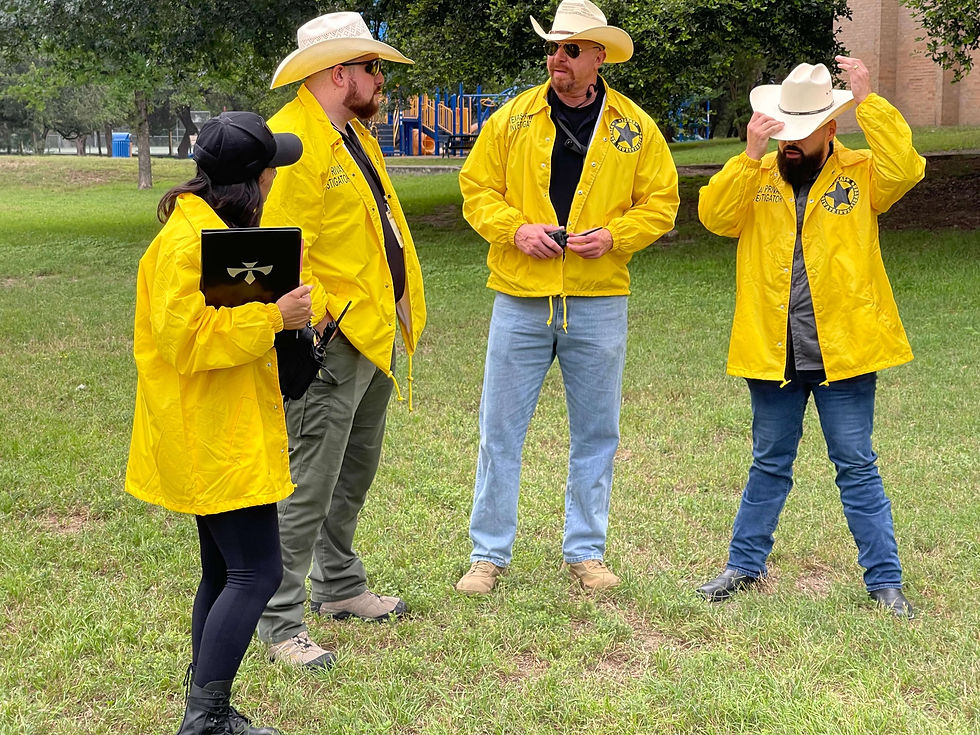
I’ve identified over 80 niches within the PI field—you’ll see those shortly.
But beyond mastering the skills, there’s a bigger question:
What kind of investigator do you want to be?
Do you want to work solo or as part of a team? Join an established company or build your own? Today’s market gives you plenty of options.
How Do You Become a PI? Understanding the Journey
Although I'm a Texas Private Investigator, what I'm about to share applies to about 99% of you, regardless of where you're starting from.
We're going to cover everything you need to know about getting your PI license, and then some.
I've spent six years training new investigators, and before that, I taught at a police academy. So when I say this field is evolving into something more dynamic and multifaceted than ever before, I mean it—and I want to make sure you're ready for it.
Every case brings a new challenge. You're constantly learning. And the work carries real emotional weight, because you're impacting people's lives in real time. That's exactly why I love it.
It's a marathon, not a sprint—but it's the kind that can last a lifetime.
Every Case Matters: Why Training is Critical
For every client, their case is the Super Bowl—there’s no room for average work. That level of performance takes real skill.
There’s no universal “PI boot camp” or six-month academy that fully prepares you for this career. Most investigators either learn the hard way on the job—or they accelerate their growth through focused, practical training. That's exactly what we offer at StriderPI.
Training isn’t just part of the process—it is the process. It’s the most important first step in becoming a private investigator—more important than even getting your license—and it’s what separates the ones who make it from the ones who don’t.
In-Person vs Online Private Investigator Training
There are dozens of online training organizations offering solid courses—and for some people, that’s a good place to start.
But we do things differently. We teach exclusively in person. Why? Because we believe in-person training delivers a level of preparation you simply can’t replicate online.

First, your classmates become the foundation of your professional network. These are the people you’ll call on for advice, collaboration, and even casework down the line.
Second, you get real-time feedback. You can ask questions, work through scenarios, and learn in a way that actually sticks.
And third—we get to meet you: the next generation of private investigators!
Some of you won’t just train with us—you’ll work with us. We recently wrapped a serial predator case where three former students joined the investigation. Our work directly contributed to an arrest and additional charges—that’s the kind of outcome that reminds you this work matters.
The Three PI Fundamentals™ – (How you Really Become a PI)
Whether you train with us or not, this next section will get you started.
First things first: you need to learn the three core PI Fundamentals: OSINT, Surveillance, and Report Writing©.
These are your ticket to basic cases like workers' comp, infidelity, or simple surveillance. Without them, you won’t be able to handle even simple assignments—let alone complex investigations.

OSINT: PI Fundamental #1 - Open Source Intelligence
OSINT stands for open-source intelligence. It’s all the computer-based sleuthing you do—digging through public records, social media, databases, and other publicly available information to uncover the truth.

You can build a full career as an OSINT specialist right from your home office. We call these investigators OSINT agents—PIs who focus on digital investigations.
As a rookie PI, you have options: focus on becoming an OSINT agent, a field agent, or a combination of both.
Why OSINT Training Matters

OSINT is a core part of modern investigations. Law enforcement, the military, the CIA, and virtually every organization involved in intelligence, security, or investigations rely on it.
Proper OSINT training allows you to find what others miss, work efficiently, and produce results that hold up under scrutiny.
SURVEILLANCE: PI Fundamental #2 - Field Investigation Skills

Surveillance is both an art and a science. You can practice it for years and still keep improving.
I love it—even when it’s hours or days of observation for just seven seconds of action. Tracking a professional or highly aware target? That’s when it gets really exciting.
What Makes Good Surveillance?
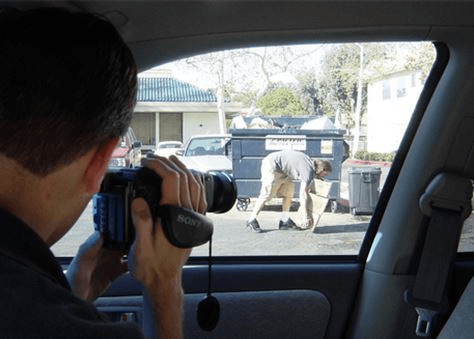
A successful surveillance mission is simple in concept: gather accurate information on a subject within a defined timeframe, without being detected. Pictures and video are the best forms of documentation, though not every mission requires them.
Take a look at this example image of a surveillance mission. Notice anything wrong? The agent is way too close—classic “TV-style” surveillance. In real life, being noticed even once can compromise the entire operation. Done correctly, the subject never knows you were there.
Field Agents vs OSINT Agents
Surveillance and live operations are the domain of field agents.
They handle missions like:
Surveillance and counter-surveillance
On-site locates and confirmations
Interviews and direct contacts
Other live investigative tasks
That said, at StriderPI, we teach every PI the fundamentals of both surveillance and OSINT. Even if you don’t plan to do the work yourself, understanding its limitations, uses, and options is essential.

I consider myself more of a field agent—I enjoy being in the field, interacting with both good guys and bad guys.
Very few investigators master both OSINT and field work. Being skilled in both is rare, and it makes you exceptionally valuable.
REPORT WRITING: PI Fundamental #3 - Documenting Your Investigations

Report writing is a core skill for both field agents and OSINT agents.
Even if you don’t write them often, report writing is a fundamental skill every rookie must master.
Here’s why:
Some Cases Require Written Reports
Certain cases demand written documentation. These can range from a simple note—“Surveillance initiated at [location] at [time]; pictures attached”—to complex investigative reports spanning dozens of pages. For perspective, my shortest report was half a page; my longest reached 72 pages, with 150 findings and over 14,500 pages of exhibits and appendices!
It Builds Observer Discipline
Approach every investigation as if you’ll need to write a report. Track time, note key events, take photos, and document appropriately. This practice trains you to be a disciplined observer—a skill that’s critical in the PI world.
It Proves You Did the Work
A report is your proof. Even years later, if a client questions your work, a detailed report demonstrates exactly what was done.
Best Practices for PI Report Writing
Report writing isn’t just paperwork—it trains you to observe, collect facts, and think like a private investigator.
Tools like Signal are great for tracking events in real time, making it easier to compile reports later. Even if you rarely write formal reports, approach every case as if documentation will be required, focusing on facts, evidence, leads, and relevant information.
The truth is simple: reports train your brain to be an investigator.
Private Investigator Qualifications: Your Next Steps
To summarize, becoming a PI starts with mastering the three core fundamentals: OSINT, Surveillance, and Report Writing. That’s how you get started—and actually begin handling real cases.
Success in this field comes from understanding the balance between OSINT and fieldwork.
StriderPI Success Formula B: 80% OSINT / 20% Fieldwork

For most cases, roughly 80% of the work happens online, and 20% in the field.
Even if you spend your days in an office letting others do the fieldwork, you need to know what’s possible, what’s realistic, and how field agents can support your case. Likewise, if you’re primarily a field agent, it’s essential to understand what OSINT agents can accomplish.
How to Become a Private Investigator: The Bottom Line
Becoming a PI is a journey—not an easy one—but it’s worth every step.
The day I received my Texas PI license in 2019 was a turning point. I left behind a career I wasn’t passionate about and began an adventure where every case is different. Since then, I’ve worked stolen semi-trucks, HOA fraud, violent assaults, conspiracies, animal rights terrorism, MUD fraud, theft, real estate fraud, and even attempted murder.
You can do all of this too, if you take that first step on your own personal PI journey.


Comments